
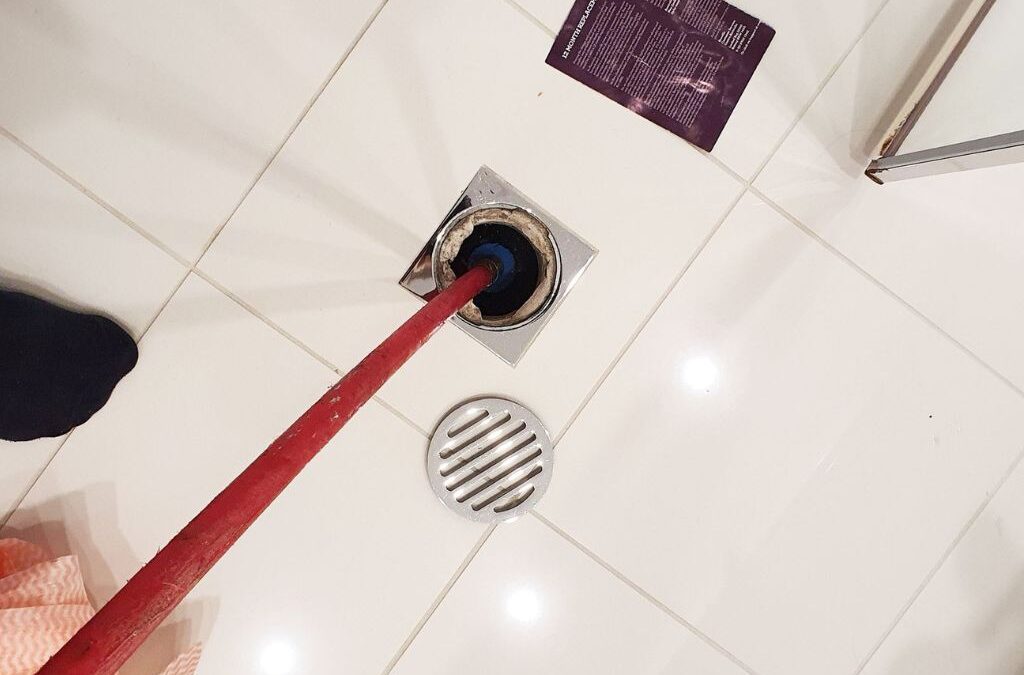
Learning how to get rid of smelly drains in bathroom spaces is something many people only start to look into the hard way. Maybe a guest embarrassingly mentions it – and you finally have to face the fact that something you’ve been quietly ignoring for three weeks has become impossible to ignore anymore.
But don’t feel too bad about it – it’s actually one of the most common household complaints. And the good news is that most smelly bathroom drains respond well to simple DIY remedies if you work through them in the right order.
So in our guide, we’ll start with the simplest possible fixes and work our way up from there – so you’re not pulling pipes apart when a kettle of hot water might have done the job!
But first … What’s Actually Causing It?
Before we get stuck into that smell, it helps to understand what causes smelly bathroom drains in the first place – because the cause determines which remedy actually works.
The most common culprit is biofilm. And what’s that?
It’s a layer of organic matter:
- Soap scum
- Skin cells
- Hair
- Body oils.
Think of it all mixing together over weeks and months – building up on the inside of the pipe and drain components. In Brisbane’s warm, humid conditions, this organic material breaks down and produces hydrogen sulphide gas, which is exactly what that rotten egg or sewer smell is. It’s not dangerous at the concentrations found in a household drain … but it is unpleasant!
Other common causes include a dry P-trap – the curved section of pipe beneath your drain that’s supposed to hold a small amount of water to block sewer gases from rising. If a bathroom isn’t used regularly, the water in the trap evaporates, and the gas comes straight up.
A blocked or partially blocked vent pipe can also create negative pressure in the drain system that draws sewer gas back through the trap. And in older Brisbane homes, deteriorating pipes or failed drain joints can allow sewer gas to escape directly into the wall cavity before it ever reaches a trap.
What should you have done to prevent all of this?:
- Regular flushing with hot water
- Occasional cleaning of the drain cover and trap
- Keeping infrequently used bathrooms from drying out entirely.
None of it is complicated – just easy to forget.
7 Ways to cure smelly bathroom drains
We’ve ranked them from the simplest fix to the most involved – but all things you can try yourself. Work through them in order and, with a bit of luck, you’ll solve the problem before you reach the end of the list…
1. Start with the drain cover
Remove it and clean it.
It takes 30 seconds, and yet it’s almost always skipped. All that soap scum, hair, and biofilm accumulate on the underside of the cover and around the drain opening – and they smell.
A smelly drain in bathroom situations often starts right at the top – not further down the pipe at all:
- Scrub the cover with an old toothbrush and some dish soap
- Wipe around the drain opening
- Replace it.
If the smell improves noticeably, you’ve found the source.
2. Boiling or very hot water
Another smelly drains in bathroom remedy that takes no longer than making a cup of tea … literally!:
Pour a full kettle of boiling water slowly down the drain. The hot water loosens and flushes biofilm from the pipe walls and can break down soap scum buildup in the trap and the first section of pipe. Do it once a week as ongoing drain maintenance, and it significantly reduces the rate at which smell-producing buildup accumulates.
Note: boiling water is fine for ceramic basins and most floor drains, but avoid it on acrylic shower bases.
3. Bicarb & vinegar
The classic combination:
- Pour half a cup of bicarb soda directly into the drain
- Follow immediately with half a cup of white vinegar
- Let the fizzing reaction do its work for 15-20 minutes.
The chemical reaction helps break up organic buildup on the pipe walls. Finish with a flush of hot water to clear everything through. It’s one of the more effective smelly bathroom drain home treatments for early to moderate buildup, and it’s safe for all pipe types, too.
4. Dish soap & hot water
A good squirt of dish soap followed by hot water is underrated as a drain treatment. Dish soap is designed to cut through grease and organic matter, and run down in volume, it coats the inside of the pipe and helps carry biofilm through.
Truth be told, it’s better as a regular maintenance habit than a one-off fix – but well worth doing as part of a cleaning sequence.
5. Refill the P-trap
If the smelly drains problem is in a bathroom that doesn’t get used regularly – a guest bathroom or a second toilet, perhaps – the P-trap has probably dried out.
The fix is simple: run the tap or flush the toilet to refill the water seal. The smell should clear within a few minutes once the trap is wet again.
Floor drains work on the same principle but use a different trap design built into the drain body itself. If a bathroom floor drain is the source, running water into it refills the water seal just the same.
For any drain that dries out repeatedly, pouring a small amount of cooking oil in after refilling slows evaporation and keeps the seal intact for longer between uses.
How to get rid of smelly floor drains in bathroom situations often comes down to exactly this – a dried-out water seal rather than any buildup or blockage.
6. Clean the P-Trap directly
If hot water and bicarb haven’t shifted the smell, the P-trap itself may have a buildup of sludge sitting in the bottom of the curve.
Under a basin, the P-trap is usually accessible:
- Place a bucket underneath
- Unscrew the trap
- Remove it
- Clean it out thoroughly
- Reinstall.
This is the most hands-on DIY fix on this list but it’s not too complicated – and it’s often where the worst of the buildup sits.
For shower floor drains, the trap is usually fixed in position and not removable without tools – a flexible drain brush can reach into the trap and scrub it out without requiring disassembly, though.
7. Enzyme-based drain cleaner
If you’ve worked through everything above and your smelly drains in bathroom issue persists, an enzyme-based drain cleaner is the next step before calling anyone.
Tempted to use chemical drain cleaners instead? Think again:
- They’re harsh
- They can damage older pipes
- They often don’t even fully address the biofilm issue.
Caustic soda and bleach-based drain cleaners really shouldn’t be used either. They can mask the smell temporarily while leaving the underlying buildup intact, and repeated use can damage pipe seals.
Enzyme cleaners, on the other hand, use biological agents to break down organic matter over time. This makes them a gentler natural drain cleaner option for treating build-up in pipes. They work more slowly but more thoroughly. Just make sure to follow the product instructions, which usually involve leaving the treatment overnight with no water use on that drain.
BONUS READ: Kitchen Sink Smells? 8 Quick Fixes For Common Causes
When DIY isn’t enough
Wondering how to fix smelly drains in bathroom situations if none of the above worked? Think again, because something’s probably wrong further into the system.
Could be:
- A vent pipe blockage
- A cracked drain joint allowing sewer gas ingress
- A partial blockage deeper in the line that’s accumulating waste faster than any surface treatment can address.
At that point, a CCTV drain inspection will find it. Brisbane Drain Cleaning‘s licensed plumbers can locate the source of persistent drain odour quickly and fix it properly.
Get in touch for an obligation-free quote.
Related posts:
 The Smell Test: Ranking Smelly Drains (And How To Fix Them)
 How To Get Rid Of Drain Flies In 5 Different Ways
 Kitchen Sink Smells? 8 Quick Fixes For Common Causes
 9 Signs Of Blocked Drains (And Brisbane Is Making It Worse)
 5 Ways To Find Drains On My Property
 The 5 Best Natural Homemade Drain Cleaner Recipes
