
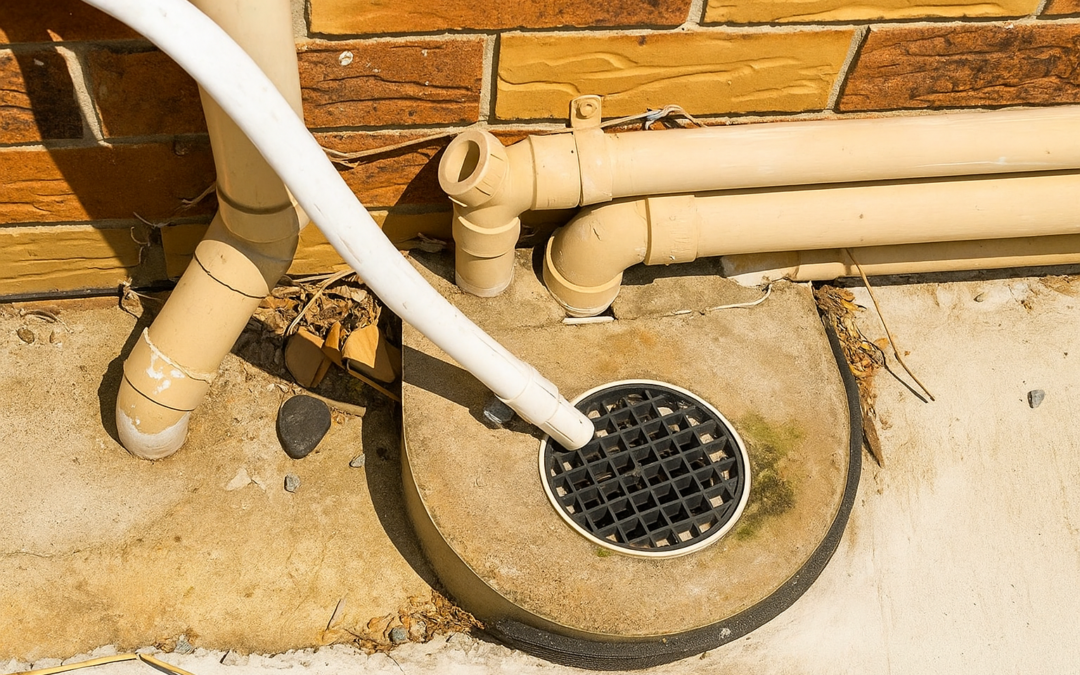
Have you just wandered around your yard and spotted a low, capped grate somewhere near an outside wall? It’s usually low to the ground and easy to miss, but there’s a good chance you’ve just stumbled upon an overflow relief gully without even realising what it was doing there.
It’s one of those plumbing fittings that obviously seems like it’s doing something simple and important, but can go basically completely unnoticed for years – right up until the moment it doesn’t. It’s at that point that understanding what it actually does can save you a lot of confusion and a fairly unpleasant surprise down the track.
So, what is it doing?
In simple terms, this innocuous fitting – often referred to by plumbers as an ‘ORG’ as a nod to its acronym – sits in the sewer line between your home’s internal plumbing and the main sewer connection, acting as a pressure release point. If something further down the line gets blocked and sewage starts backing up, this fitting is designed to let it escape outside, in your yard, rather than forcing it back up through the drains, toilets and showers inside your home. It’s a simple but clever bit of design, and it exists specifically to protect the inside of your house from a much worse outcome.
Because it’s handling sewage rather than stormwater, it’s more precisely known as a sewer overflow relief gully, and its exact position and height are governed by overflow relief gully Australian standards, which set out how far below your lowest internal fixture it needs to sit. If you looked at an overflow relief gully diagram, you’d see just how deliberate that positioning is, with the cap sitting flush at ground level and the fitting itself tucked beneath the level of your lowest drain, quietly waiting to do its job the moment it’s needed.
5 Potential problems with your ORG
Understanding the theory is one thing, but where this fitting really matters is in the very real, and often fairly unpleasant, problems that turn up in someone’s yard or bathroom the moment it stops working the way it should.
Have you suddenly noticed your ‘ORG’ because it’s not doing what it’s supposed to?
1. Is it overflowing into the yard?
Is your overflow relief gully overflowing? When there’s a blockage somewhere further along the sewer line, it can definitely do that – but it’s really just doing exactly what it was designed to do. It’s releasing pressure outside rather than forcing sewage back up through your home’s fixtures.
It’s not pleasant to look at or smell, but it’s genuinely working as intended, and it’s also telling you, loudly, that there’s a blockage in your sewer line that needs to be tracked down and cleared.
2. Is the fitting itself blocked?
Sometimes the issue isn’t further down the line at all, it’s sitting right there in the fitting. Leaves, dirt, silt and general yard debris build up over time, and an overflow relief gully blocked at the source stops functioning as the safety valve it’s meant to be.
When that happens, pressure that should have a safe way out has nowhere to go, and the risk of sewage backing up inside your home instead goes up considerably.
3. Is the cap missing or damaged?
The overflow relief gully cap isn’t just a finishing touch. If it’s cracked, sitting loose or missing altogether, that creates an easy way in for stormwater, debris and even pests, while also letting odours drift up from below far more than they should.
It’s a small, inexpensive fix, but it’s the kind of thing that gets overlooked simply because nobody’s looking closely at that particular spot in the yard.
4. Is it an older fitting that hasn’t kept up?
Plenty of established properties still have an old overflow relief gully installed to whatever standard applied at the time it went in – and older fittings don’t always sit at the height current regulations require.
This tends to surface during renovations, extensions, or even a straightforward property sale, when an inspector flags it as something that needs bringing up to code before things can proceed.
5. Was it never installed correctly?
Whether it’s part of a new build or a straight replacement, overflow relief gully installation leaves very little room for error, because getting the height or positioning wrong undermines the entire purpose of having one in the first place.
This isn’t a job for a DIY afternoon, and it’s exactly where a licensed plumber’s grasp of the precise and detailed overflow relief gully requirements makes the real difference between a fitting that is actually protecting your home and one that just looks the part.
What this means for your property
Whether you’re dealing with an overflow that’s already happened, wondering whether yours meets current standards, or simply realising you’ve never actually checked, it’s worth having it properly assessed rather than hoping for the best. It’s an easy fitting to forget about … right up until the day it forces you to think about nothing else!
Noticed a problem with yours?
If you’re dealing with overflow, blockages, or you’re just not sure whether yours is up to standard, our licensed team can inspect, clear or replace it properly. Call the friendly team at Brisbane Drain Cleaning today.
Related posts:
 What Is A Boundary Trap? 5 Ways It Can Cause A Sewer Blockage
 How To Unblock Drains Outside (And When You Need A Plumber)
 9 Signs Of Blocked Drains (And Brisbane Is Making It Worse)
 Understanding The 10 Different Types Of Drains
 The Weirdest DIY Drain Unblocking Fails We’ve Seen
 Why Sewers Resist: How to Unblock Sewer Pipes Effectively
