
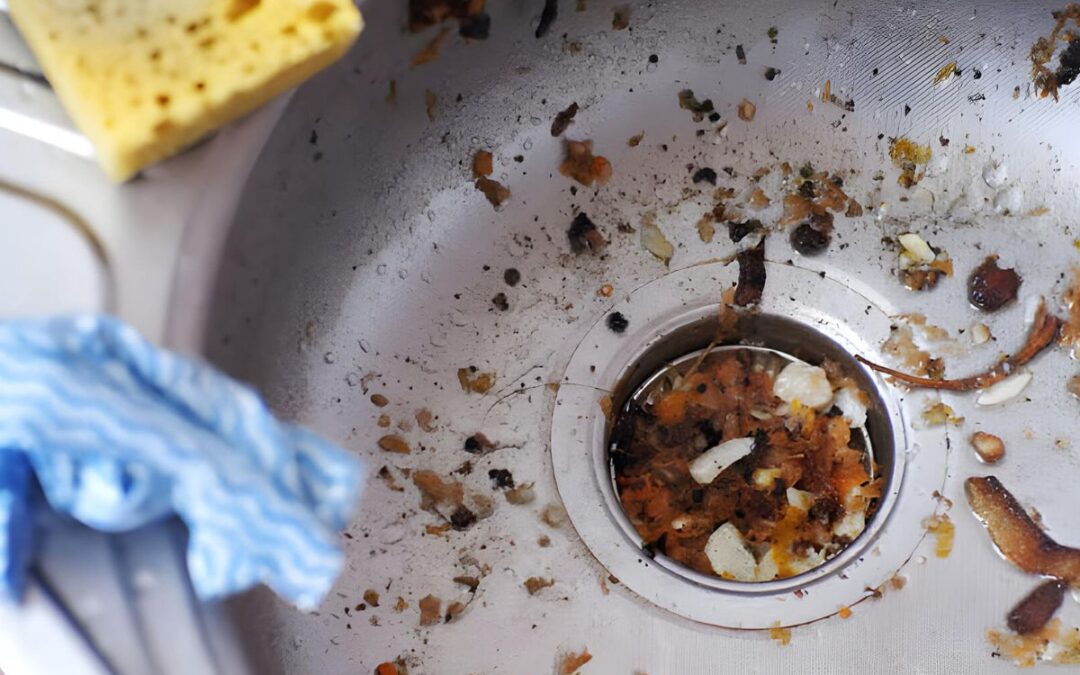
Knowing what not to put down the kitchen sink is one of those things you definitely don’t learn at school, but you probably should. Instead, all of us just figure it out the hard way … and usually at the worst possible time.
But we’ll get to our list of the things you shouldn’t put down there. First, a quick detour:
Things you absolutely SHOULD put down your kitchen sink
Let’s run down the list of the things experienced blocked drain plumbers always say are super-safe to flush down the kitchen sink:
- Water
- Dish soap
- More water.
Yep – that’s basically the whole list.
Okay, maybe a bit of rinsed-off food that makes it past the strainer in tiny amounts, you can get away with. But everything else, put somewhere else!
The obvious stuff you already know not to do
Now, let’s get to what NOT to put down the kitchen sink.
And honestly, most people are fully aware of the big ones already. Because you know not to pour a whole pot of pasta water with the noodles still in it down the drain, right? You know, even a fistful of rice is probably a bad idea. And you’ve probably been told at some point that cooking oil is a no-go.
And yet – these kinds of things still cause blocked drains. Every day. Everywhere.
And that tells us two things:
- Either people forget
- Or there’s a longer list than most people realise.
Spoiler: it’s both!
What NOT to put down your kitchen sink
The rest of our blog is about the non-obvious things that you should NOT be trying to shove down the drain. And they’re the things that cause real, recurring kitchen sink problems – and many people have no idea they’re doing the wrong thing.
1. Cooking oil & grease
For many of us, this one is pretty obvious – but it’s also close to the number 1 cause of blocked kitchen drains in Brisbane, too. So it definitely earns the top spot.
Hot grease goes down liquid, sure – but it then cools into a solid coating on the inside of your pipes. Do it enough times, and you’ve essentially built a wax plug.
Let it cool in a jar and bin it instead.
2. Coffee grounds
This one catches people out constantly. Because coffee grounds feel like they rinse away easily – and they do …
… right up until the moment they don’t.
In reality, coffee grounds:
- Accumulate fast
- Clump together
- Create dense blockages that are surprisingly stubborn.
Grounds go in the bin or the compost – not the sink.
3. Eggshells
There’s an old myth that eggshells are fine for the sink. In the 80s and 90s, a lot of people even believed that they sharpen garbage disposal blades – and we’re not kidding.
Well, they don’t – and even if you do still have a disposal unit, the membrane inside the shell wraps around other debris and makes clogs worse.
Bin them! And if you have chickens, crush them up a bit and feed them back to your feathered friends. They gobble them right up!
4. Flour
Think about what flour does when it gets wet.
It becomes a paste.
Now imagine that paste coating the inside of your pipes and catching every bit of food residue that comes after it. Not great, right?
Even small amounts rinsed off bowls and utensils add up over time.
5. Rice & pasta
Both are delicious … and both expand in water. Both then turn soft and sticky. And both love to clump together in bends and traps.
Sure, a little bit rinsed off a plate probably won’t cause a disaster – but scraping a whole pot’s worth down the drain is a guaranteed problem waiting to happen.
6. Fibrous vegetables
What are we talking about here?:
- Celery
- Asparagus
- Artichoke
- Corn husks.
Basically, anything with long, stringy fibres. The fibres wrap around pipe walls and around each other, creating a tangled mess that water can’t push through.
If you’re prepping a big batch of veg, scrape the offcuts into the bin or compost container first.
7. Starchy vegetables
Veggies down the drain are just generally a really bad idea – even the starchy ones.
Potato peels are the main culprit here. Starchy peels behave a lot like flour – they break down into a thick, gluey paste that coats pipes and slows drainage noticeably.
Peel over the bin … not over the sink.
8. Fruit pits & seeds
What do cherry pits, avocado seeds, and peach stones have in common?
As far as your drain is concerned, they’re basically rocks.
They don’t break down, they rattle around, and they sit in traps waiting to catch everything else coming through. Chuck ’em out!
9. Cleaning product residue … in large amounts
Rinsing a cloth or sponge into the kitchen sink? That’s fine.
But pouring a significant amount of bleach, caustic cleaner, or chemical drain product down the sink regularly? That’s another story. A clear no-no.
It can corrode older pipes over time and disrupt the bacterial balance in sewer systems. Use what you need, but don’t treat the sink as a dumping ground for leftover chemicals.
10. Milk & dairy … in large quantities
This one surprises people – because what’s the harm of something almost as liquid as water?
And sure, small rinses are generally fine. But pouring significant amounts of old milk, cream, or yoghurt down the drain is actually an environmental issue as much as a plumbing one.
Dairy depletes oxygen in waterways when it reaches the sewer system. Your local council’s waste guidelines are worth a look here. Or you can take the short-cut and just not do it.
11. Medications & vitamins
Not a blockage issue – but we’ve included it anyway. Because flushing or rinsing expired medications down the sink introduces pharmaceuticals into the water system.
Remember, most pharmacies in Brisbane will take back unused medications for safe disposal.
12. Paint, solvents & household chemicals
Even water-based paints can dry and harden inside pipes. And solvents are corrosive. Neither belongs anywhere near your kitchen drain.
Most local councils have chemical disposal programs – it’s worth knowing where your nearest drop-off is.
So your drain is already blocked … Now what?
If you’ve found yourself reading this a little too late, don’t stress. Knowing how to unblock a kitchen sink at the early stages often just means:
- Hot water
- A bit of baking soda & vinegar
- Or a basic plunger.
So if you’ve got a slow drain and not much else going on, it’s worth taking the DIY route first. Cheap … and often works.
But if it keeps coming back, or the water isn’t moving at all, that’s usually a sign the blockage is deeper than surface-level remedies can possibly reach. So while knowing how to clean a kitchen sink drain properly is useful for drain maintenance, it won’t clear a solid grease build-up halfway down the plumbing line.
Still blocked? We’ll sort it
Here at Brisbane Drain Cleaning, blocked kitchen drains are a daily job – and we tend to see the same culprits over and over. So if your sink isn’t draining and you’ve tried the basics, it’s time to get it looked at properly.
For fixed pricing, same-day service and guaranteed workmanship, call or book online – and we’ll have it flowing again in no time.
Related posts:
 Kitchen Sink Smells? 8 Quick Fixes For Common Causes
 Can Coffee Grounds Go Down The Sink? Here’s What Really Happens
 43 (Yes, 43) Real Causes Of Blocked Drains
 9 Signs Of Blocked Drains (And Brisbane Is Making It Worse)
 How To Unblock A Sink Without Calling A Plumber
 Are Flushable Wipes Actually Flushable? 5 Ways They Damage Plumbing
