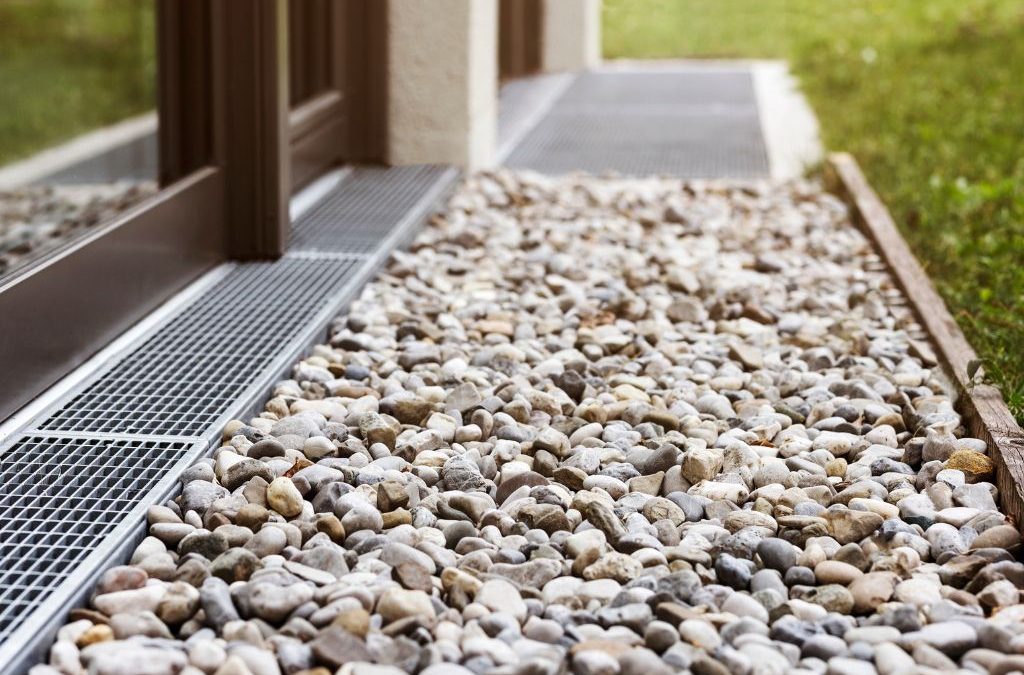
When was the last time you considered it might be time to install a French drain? Well, perhaps you’ve got soggy lawns, or have spotted water pooling around your home, or a damp patch that never seems to dry out. But what is a French drain, anyway?
Let’s dive into the exciting world of French drains!
How does a French drain work? It’s a simple yet powerful system that quietly diverts unwanted water away from your property – protecting your home’s structure and landscape. In our blog today, we’re going to lay out:
- What is a French drain
- How it works
- And why it’s still one of Australia’s best long-term drainage solutions.
What is a French drain?
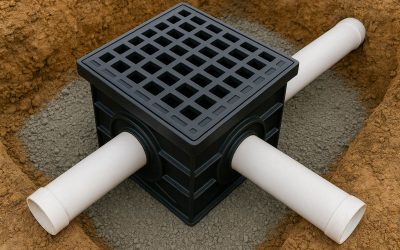
It’s a clever, simple, below-ground channel that redirects surface or groundwater away from problem areas like lawns, driveways, or house foundations. Essentially, it’s a gravel-filled trench containing a perforated French drain pipe that collects and carries water away to a safer discharge point – like a stormwater pit or soakaway system.
Beyond that, what is a French drain system really doing? At the end of the day, it’s all about gravity – guiding excess water downhill so it doesn’t sit where it shouldn’t.
How does a French drain work?
When water seeps through the soil, it naturally flows into the gravel trench, then into the slotted pipe, which channels it away. So it’s a totally passive system – no pumps, no moving parts. Just smart design that uses natural gradients and proper backfill materials to do the heavy lifting.
French drainage prevents:
- Standing water
- Foundation damage
- Even stops mosquito breeding.
That makes it a smart solution for Brisbane’s heavy wet-season conditions.
7 Signs you might need a French drain
Here’s how to tell if your home or yard is crying out for one – whether you’re in a new estate, an older Queenslander, or a low-lying property that just can’t seem to ever stay dry.
1. Persistent yard puddles
If water pools in the same spots after every downpour, it means your soil can’t absorb water fast enough. A French drain system gives that excess water somewhere to go, preventing it from suffocating your lawn or drowning your plants.
2. Water against the foundation
When water collects around your home’s base or seeps into brickwork, hydrostatic pressure builds up and can cause cracks or leaks inside. Installing a French drain along the perimeter is a proactive fix that stops foundation damage before it starts.
3. Damp or musty basements
Ok, so in Brisbane, basements are pretty rare. But if your semi-underground garages and storage areas are tapping moisture, a trench-style drainage channel around the affected wall redirects the water flow and keeps your interior dry.
4. Erosion & uneven ground
Are you constantly filling or re-levelling soil that’s washed away? That’s a big red flag that water is moving the wrong way. The right French drain installation redirects surface runoff, preserving your landscaping and saving you from repeat yard repairs.
5. Mould on external walls or paths
Moisture seeping into masonry or paths often means you’ve got poor ground drainage. A properly designed trench helps stop that problem at the source – before it becomes a costly remediation job.
6. Neighbours’ water flowing onto your property
If your block sits lower than your neighbours’, there’s a chance you’re getting the worst of their stormwater runoff. Installing a French drain Australia homeowners can trust to do its job can protect your property line by intercepting that flow before it reaches your garden or garage.
7. Gurgling or slow stormwater lines
If your stormwater drains seem to struggle during heavy rain, the issue may not be inside the pipe but in the way your yard drains into it. A trench system supports your existing network, easing the load and preventing future stormwater drain blockages.
Why choose a French drain over other solutions?
French drains are:
- Discreet
- Long-lasting
- And highly customisable.
Compared to surface channels or soak pits, they handle higher water volumes and don’t spoil your yard’s appearance. For sloped blocks or homes with recurring waterlogging, nothing beats a properly graded French drain pipe laid by a professional.
They’re also low-maintenance once installed – an occasional flush keeps them clear for decades of reliable performance.
How to install a French drain (The right way)
Curious about how to install a French drain? Here’s the simplified version:
- Identify the low point or problem area.
- Mark out the trench path leading to a safe runoff location.
- Dig a trench with a slight gradient (about 1cm per metre).
- Line it with geotextile fabric and coarse gravel.
- Lay the slotted pipe with holes facing down.
- Cover with more gravel and fold the fabric over before backfilling.
Sounds pretty straightforward in principle, right? But in reality, it needs precision to work long-term – wrong slope, poor soil compaction, or cheap materials can turn a good idea into a flooded French trench!
That’s why professional installation matters. French drainage specialists use:
- Levelling lasers
- Waterproof fabrics
- Quality materials.
That way, they’ll whip something up that’s specially designed to handle Brisbane’s clay-heavy soils and unpredictable storms.
Get your drainage right – First time
If your yard’s staying soggy or water’s creeping ever closer to your home, a professional inspection will tell you whether a French drain is your best solution. Brisbane Drain Cleaning can design and install systems tailored to your property, backed by guaranteed workmanship and local know-how.
Get your free quote today and keep your home dry all year round.